

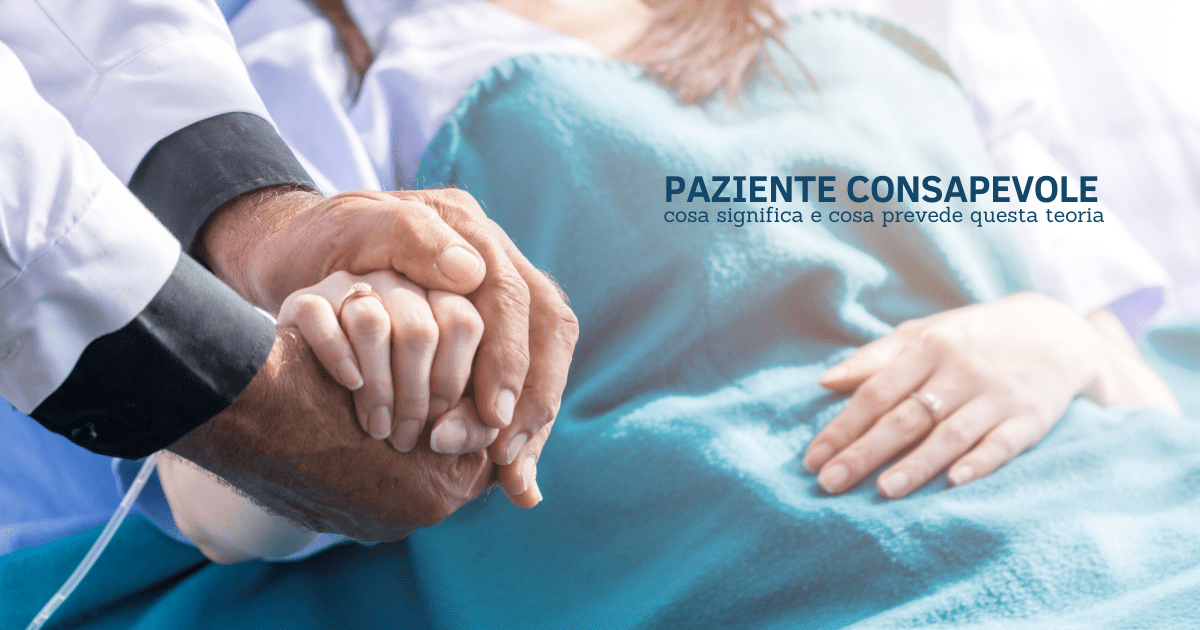
The term paziente consapevole, or “informed patient,” describes an individual who actively engages in healthcare decisions by understanding diagnoses, treatments, risks, and available alternatives. In today’s medical landscape, where information is widely accessible and treatment options are increasingly complex, this role has become essential. Patients are no longer passive recipients of care; they are expected to ask questions, evaluate options, and collaborate with healthcare providers to determine the best course of action.
This transformation answers a fundamental need: navigating modern healthcare requires more than trust—it requires knowledge. From reviewing test results online to researching medications, patients now operate within an environment rich in data but often difficult to interpret. The informed patient emerges as someone capable of bridging that gap.
Yet awareness alone is not enough. The paziente consapevole must also develop critical thinking skills, emotional resilience, and the ability to balance professional advice with personal values.
As healthcare systems continue to evolve, the informed patient stands at the center of a new paradigm one defined by partnership, transparency, and shared responsibility.
From Passive Care to Active Participation
Historically, the doctor-patient relationship was grounded in a paternalistic model. Physicians held authority, and patients were expected to follow recommendations without questioning. This structure was shaped by limited access to information and a strong reliance on professional expertise.
Over time, ethical and legal developments began to shift this dynamic. The concept of informed consent introduced the idea that patients have the right to understand and agree to medical interventions. By the late 20th century, this principle had become central to healthcare practice.
| Period | Patient Role | Decision Model |
|---|---|---|
| Pre-1970s | Passive | Physician-directed |
| 1970s–1990s | Semi-informed | Consent-based |
| 2000s | مشارative | Shared decision-making |
| Present | Fully engaged | Patient-centered care |
This evolution reflects a broader societal trend toward individual autonomy. The paziente consapevole is the result of decades of progress, representing a shift from obedience to collaboration.
The Information Revolution in Healthcare
The digital age has transformed how patients access and use medical information. Online platforms provide instant access to research, treatment guidelines, and patient experiences, reshaping expectations around knowledge and participation.
Patients now arrive at consultations with pre-existing information, often having researched symptoms or diagnoses. This dynamic changes the nature of clinical interactions, requiring healthcare providers to address, confirm, or correct external information.
| Information Source | Advantage | Limitation |
|---|---|---|
| Academic websites | Evidence-based content | Technical complexity |
| Health platforms | Accessibility | Variable accuracy |
| Social media | Rapid dissemination | Risk of misinformation |
| Mobile apps | Personalized tracking | Data reliability concerns |
The challenge lies not in access but in interpretation. The informed patient must distinguish credible sources from unreliable ones, a task that requires both education and critical thinking.
Cognitive and Emotional Dimensions
Becoming a paziente consapevole involves navigating both intellectual and emotional challenges. Medical decisions are rarely made in neutral conditions; they are influenced by fear, hope, and uncertainty.
Cognitive biases play a significant role. Patients may selectively interpret information or overestimate risks based on personal experiences. Emotional responses can further complicate decision-making, particularly in serious or chronic conditions.
Experts in behavioral medicine emphasize that decision-making is a complex process shaped by both rational analysis and emotional context. Patients must often weigh probabilities rather than certainties, making choices without complete information.
Emotional support, therefore, becomes a crucial component of patient-centered care. Healthcare providers are increasingly expected to guide patients through both the informational and psychological aspects of decision-making.
Shared Decision-Making as a Core Practice
Shared decision-making represents the practical application of the informed patient model. It involves collaboration between patients and healthcare providers to select treatments that align with both medical evidence and personal values.
This approach recognizes that clinical decisions are not purely technical. They often involve trade-offs between benefits, risks, and quality of life considerations. By involving patients, healthcare becomes more tailored and meaningful.
Key elements of shared decision-making include clear communication, presentation of alternatives, and mutual respect.
Research has shown that shared decision-making improves patient satisfaction and adherence to treatment plans. It also reduces unnecessary interventions by ensuring that patients fully understand their options.
Barriers to Becoming an Informed Patient
Despite its advantages, the concept of the paziente consapevole is not universally accessible. Several barriers limit patient participation.
Health literacy is one of the most significant challenges. Medical terminology and complex data can be difficult to understand, preventing meaningful engagement. Socioeconomic factors also play a role, influencing access to information and healthcare resources.
Time constraints within healthcare systems further complicate the issue. Short consultation times may limit opportunities for detailed discussions, reducing the effectiveness of shared decision-making.
Cultural differences also shape patient behavior. In some contexts, individuals may prefer to defer decisions to healthcare providers, reflecting different values and expectations.
Addressing these barriers requires systemic changes, including education, improved communication strategies, and accessible resources.
Technology and the Rise of Patient Empowerment
Technological innovation has accelerated the development of the informed patient. Electronic health records allow individuals to access their medical history, test results, and treatment plans in real time.
Wearable devices and mobile applications provide continuous health monitoring, enabling patients to track metrics such as heart rate, activity levels, and sleep patterns. These tools transform patients into active participants in their own care.
Artificial intelligence is also playing an increasing role, offering predictive insights and personalized recommendations. While these technologies enhance patient engagement, they also raise concerns about data privacy and accuracy.
The integration of technology into healthcare represents a significant shift, redefining how patients interact with medical systems and information.
Ethical Considerations in Patient Awareness
The rise of the paziente consapevole brings important ethical questions to the forefront. Autonomy is strengthened when patients are informed, but increased responsibility can also create pressure.
Patients may feel overwhelmed by the need to make complex decisions, particularly in situations involving serious illness. Balancing autonomy with support is a key challenge for healthcare providers.
Trust remains central to the doctor-patient relationship. Even as patients become more informed, they rely on professional expertise to interpret information and guide decisions.
Ethical healthcare requires not only transparency but also compassion, ensuring that patients are supported throughout the decision-making process.
Cultural Variations and Global Perspectives
The concept of the informed patient varies across cultural contexts. In some societies, individual autonomy is emphasized, encouraging active participation in healthcare decisions. In others, collective values or respect for authority may influence patient behavior.
Globalization and digital connectivity are gradually harmonizing these perspectives. Access to information is becoming more universal, creating shared expectations around patient involvement.
However, cultural sensitivity remains essential. Healthcare providers must adapt their communication strategies to align with patient values and preferences.
Understanding these variations enhances the effectiveness of patient-centered care on a global scale.
The Future of the Informed Patient
The role of the paziente consapevole is expected to expand as healthcare continues to evolve. Advances in technology, education, and policy will further empower patients.
Medical training programs are increasingly focusing on communication and patient engagement, preparing healthcare professionals for collaborative practice. Healthcare systems are also adopting models that prioritize transparency and shared decision-making.
The future of medicine will likely be defined by partnerships between patients and providers, supported by technology and guided by ethical principles.
Takeaways
- A paziente consapevole actively participates in healthcare decisions.
- The shift reflects a move toward patient-centered care.
- Digital access has transformed how patients obtain information.
- Psychological factors influence medical decision-making.
- Shared decision-making improves outcomes and satisfaction.
- Barriers include health literacy and systemic limitations.
- Technology is driving patient empowerment and engagement.
Conclusion
The emergence of the paziente consapevole represents a profound shift in the practice of medicine. It redefines the patient not as a passive recipient but as an active participant in care, capable of shaping decisions and outcomes.
This transformation reflects broader societal changes, including increased access to information and a growing emphasis on individual autonomy. However, it also introduces new challenges, requiring patients to navigate complex information and make decisions under uncertainty.
Healthcare systems must adapt to this reality, providing not only data but also guidance, empathy, and support. The success of the informed patient model depends on collaboration, trust, and effective communication.
Ultimately, the paziente consapevole embodies a new vision of healthcare one that balances knowledge with compassion and responsibility with care.
FAQs
What is a paziente consapevole?
It refers to a patient who understands their health condition and actively participates in medical decisions.
Why is patient awareness important?
It improves communication, supports better decisions, and enhances treatment outcomes.
What challenges do informed patients face?
They may struggle with complex information, emotional stress, and misinformation.
How can someone become an informed patient?
By consulting reliable sources, asking questions, and engaging with healthcare professionals.
Does being informed replace doctors’ advice?
No, it complements professional expertise and supports collaborative decision-making.
APA References
World Health Organization. (2016). Patient engagement and empowerment. Retrieved from https://www.who.int
Institute of Medicine. (2001). Crossing the quality chasm: A new health system for the 21st century. Retrieved from https://www.nationalacademies.org
Elwyn, G., Frosch, D., & Rollnick, S. (2009). Dual equipoise shared decision making. Retrieved from https://www.bmj.com
Topol, E. (2015). The patient will see you now. Retrieved from https://www.basicbooks.com
Ubel, P. A. (2012). Critical decisions: How you and your doctor can make the right medical choices together. Retrieved from https://www.harpercollins.com