

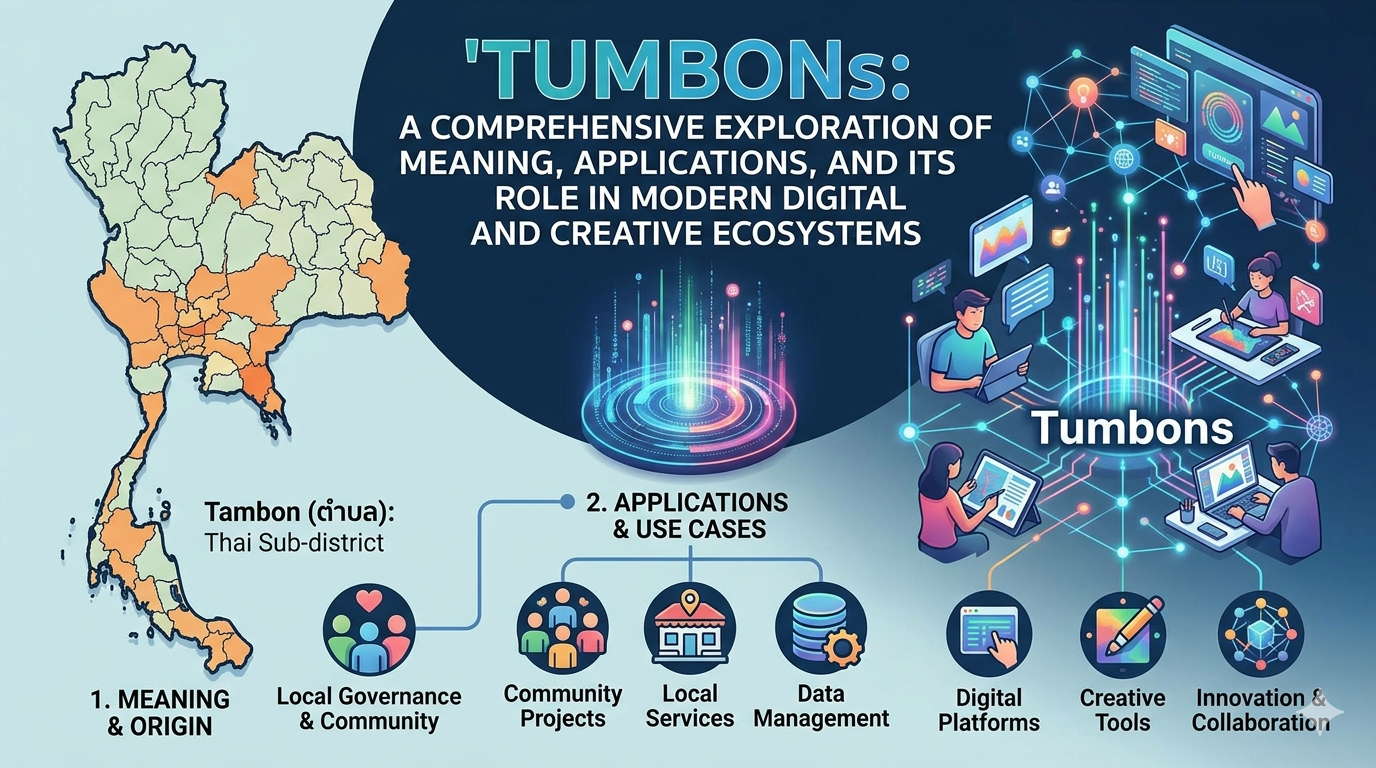
Tumbons is increasingly recognized as a multidimensional concept that blends adaptability, structured innovation, and creative exploration into a unified framework. Rather than being limited to a single definition, it represents a mindset and methodology that can be applied across technology, business strategy, education systems, and personal development practices. Moreover, tumbons emphasizes balance, allowing individuals and organizations to remain flexible while still maintaining clear objectives and measurable outcomes.
In today’s rapidly changing environment, traditional rigid systems often struggle to keep pace with evolving demands. Therefore, tumbons introduces a more dynamic approach where experimentation, iteration, and continuous improvement become central. As a result, this concept supports sustainable growth while encouraging innovation at every level. Additionally, it integrates well with modern workflows that require responsiveness and scalability.
Core Meaning of Tumbons as a Hybrid Model Combining Creativity, Structure, and Continuous Improvement in Evolving Environments
At its core, tumbons functions as a hybrid model that merges structured planning with creative flexibility. Unlike conventional frameworks that prioritize strict adherence to predefined processes, tumbons allows room for adjustment based on real-time feedback and changing circumstances. Consequently, it becomes especially valuable in environments where uncertainty is high and adaptability is essential.
Furthermore, tumbons promotes a continuous learning cycle. This cycle involves experimenting with new ideas, evaluating outcomes, refining strategies, and repeating the process for ongoing improvement. In addition, it encourages collaboration and shared knowledge, which enhances collective intelligence within teams and communities. Therefore, tumbons is not just a concept but a practical approach that aligns with modern innovation-driven ecosystems.
The Evolution and Conceptual Origins of Tumbons Within Historical Practices, Cultural Adaptation, and Modern Digital Transformation Trends
Although tumbons is a relatively modern term, its foundational principles are deeply rooted in long-standing philosophies that emphasize balance, resilience, and progress through adaptation. Historically, many cultures have valued systems that evolve over time rather than remain static. These systems often relied on observation, experience, and iterative learning to refine practices across generations.
Over time, these traditional ideas have merged with technological advancements and digital transformation trends. As a result, tumbons has emerged as a conceptual bridge between historical wisdom and modern innovation. Moreover, the rise of global connectivity has accelerated the adoption of such flexible frameworks, as individuals and organizations seek approaches that can adapt quickly to change.
How Digital Culture and Online Communities Contribute to the Emergence and Expansion of Tumbons as a Modern Concept
Digital culture plays a significant role in shaping and spreading the concept of tumbons. Online communities thrive on creativity, experimentation, and shared knowledge, all of which align closely with tumbons principles. As people engage across social media platforms, forums, and collaborative spaces, they continuously redefine how concepts evolve and gain meaning.
Additionally, digital environments encourage rapid iteration and feedback loops. This dynamic supports the tumbons approach by enabling users to test ideas, gather responses, and refine their outputs quickly. Consequently, tumbons becomes not only a theoretical framework but also a practical tool embedded within everyday digital interactions. Furthermore, its flexibility allows it to adapt to various contexts, making it highly relevant in creative and technological ecosystems.
Key Principles of Tumbons That Define Its Structure, Including Flexibility, Collaboration, Sustainability, and Continuous Learning Mechanisms
The strength of tumbons lies in its foundational principles, which collectively define how it operates across different domains. These principles ensure that while flexibility is encouraged, structure is not lost. Instead, both elements coexist to create a balanced and effective system.
Flexibility allows individuals to adjust their approach based on circumstances. Meanwhile, structured innovation ensures that goals remain clear and achievable. Continuous learning supports growth through feedback and reflection, while collaboration enhances outcomes by integrating diverse perspectives. Together, these principles form a cohesive framework that supports adaptability without compromising consistency.
The Role of Structured Innovation and Adaptive Thinking in Maintaining Balance Within Tumbons-Based Systems
Structured innovation is a critical component of tumbons because it provides direction without limiting creativity. By establishing clear objectives and guidelines, individuals can explore new ideas within defined boundaries. This balance ensures that experimentation leads to meaningful results rather than random outcomes.
Adaptive thinking further strengthens this approach by enabling quick responses to change. When conditions shift, tumbons encourages reassessment and adjustment rather than rigid adherence to outdated plans. As a result, systems remain relevant and effective over time. Moreover, this adaptability supports resilience, allowing individuals and organizations to navigate uncertainty with confidence.
Practical Applications of Tumbons Across Technology, Business, Education, Creative Industries, and Personal Growth Environments
Tumbons demonstrates remarkable versatility because it can be applied across multiple domains. In technology, it aligns with iterative development models and agile methodologies. In business, it supports strategic flexibility and customer-focused innovation. In education, it enhances adaptive learning systems and personalized instruction methods. Additionally, in creative industries, tumbons fosters experimentation and originality.
In personal development, tumbons encourages individuals to set clear goals while remaining open to change. This balance helps improve decision-making, resilience, and long-term growth. Therefore, tumbons serves as both a conceptual framework and a practical guide for navigating complex environments.
How Tumbons Enhances Innovation, Collaboration, and Efficiency in Modern Organizational Structures
Within organizations, tumbons contributes to improved collaboration by encouraging shared responsibility and open communication. Teams that adopt this approach often experience better coordination and alignment because they operate with a common understanding of goals and flexibility in execution.
Innovation also benefits from tumbons because employees feel empowered to experiment and propose new ideas. Additionally, efficiency improves as processes become more adaptive and responsive to changing demands. Consequently, organizations can maintain competitiveness while continuously evolving their strategies and operations.
Benefits of Implementing Tumbons in Dynamic Systems That Require Scalability, Responsiveness, and Long-Term Sustainability
One of the primary benefits of tumbons is its ability to support scalability. As systems grow, tumbons allows them to adapt without losing coherence. This makes it particularly valuable for startups and expanding organizations that need to manage increasing complexity.
Another advantage is responsiveness. Because tumbons encourages continuous feedback and iteration, systems can quickly adjust to new information or external changes. Furthermore, sustainability is enhanced because the framework focuses on long-term improvement rather than short-term gains. This ensures consistent progress while minimizing risks associated with rigid planning.
Challenges and Considerations When Adopting Tumbons in Real-World Scenarios Across Different Sectors and Environments
Despite its advantages, tumbons also presents certain challenges. One major issue is maintaining the balance between flexibility and structure. If flexibility becomes excessive, processes may become disorganized. Conversely, too much structure can limit creativity and reduce adaptability.
Additionally, implementing tumbons requires cultural and organizational shifts. Teams must be willing to embrace change and adopt new ways of thinking. Transitioning from traditional methods may take time, training, and consistent effort. However, with proper guidance and clear frameworks, these challenges can be effectively managed.
The Future of Tumbons in a World Driven by Artificial Intelligence, Automation, Global Collaboration, and Evolving Digital Ecosystems
As technology continues to advance, tumbons is expected to become even more relevant. The integration of artificial intelligence, data analytics, and automation tools aligns naturally with tumbons principles. These technologies enable faster decision-making, improved accuracy, and enhanced adaptability.
Moreover, global collaboration has become more common due to remote work and digital communication platforms. In this context, tumbons supports distributed teams by providing a flexible yet structured approach to coordination. As industries evolve, tumbons will likely play a key role in shaping future workflows and innovation strategies.
Emerging Trends That Reinforce the Importance of Tumbons in Modern Creativity, Business Models, and Technological Advancements
Several emerging trends highlight the growing importance of tumbons. For instance, the rise of remote work environments requires systems that are adaptable and digitally connected. Similarly, the increasing focus on sustainable development aligns with tumbons principles of long-term growth and responsible progress.
In addition, the expansion of creative industries and digital entrepreneurship encourages experimentation and personalization. These trends reinforce the need for frameworks like tumbons that support both structure and innovation. As a result, tumbons is positioned to remain a valuable concept in shaping future practices across industries.
Integrating Tumbons Into Daily Life, Professional Practices, and Strategic Thinking for Enhanced Adaptability and Continuous Growth
Tumbons is not limited to large organizations or complex systems. Individuals can also apply its principles in daily life to improve productivity and personal development. For example, setting clear goals while remaining open to adjustments allows for better time management and decision-making.
In professional environments, tumbons can enhance teamwork, project management, and leadership effectiveness. Leaders who adopt this approach tend to focus on adaptability, communication, and strategic alignment. Consequently, teams become more cohesive and capable of handling challenges efficiently.
Practical Steps to Adopt Tumbons Principles for Personal Productivity, Goal Achievement, and Long-Term Skill Development
To implement tumbons in everyday routines, individuals can start by defining clear objectives and breaking them into manageable tasks. Then, they can regularly evaluate progress and make necessary adjustments. Additionally, seeking feedback from others helps improve outcomes and encourages continuous learning.
Furthermore, embracing collaboration and diverse perspectives enhances problem-solving capabilities. By combining structured planning with flexibility, individuals can achieve a balanced approach to productivity. Over time, this leads to improved skills, better outcomes, and sustained growth in both personal and professional contexts.
Final Perspective on Tumbons as a Transformative Concept That Bridges Creativity, Structure, and Adaptability in an Increasingly Complex and Interconnected World
Tumbons represents a forward-thinking approach that integrates multiple dimensions of modern life. By combining innovation, structure, and flexibility, it provides a framework that adapts to changing environments while maintaining direction. As industries continue to evolve, the relevance of tumbons will only increase.
Ultimately, tumbons is more than just a concept it is a mindset that encourages continuous improvement, collaboration, and sustainable growth. Whether applied in technology, business, education, or personal life, it offers a practical and effective way to navigate complexity. Therefore, understanding and adopting tumbons can empower individuals and organizations to thrive in an ever-changing world.
 Oliver