

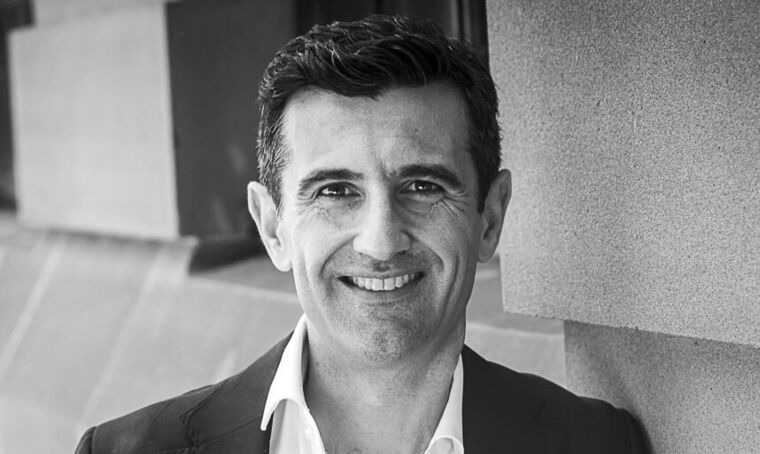
Interest in George Chirakis usually begins with a straightforward curiosity: who he is and why his name appears across professional, civic, and organizational contexts. Unlike public figures whose identities are shaped by media exposure, Chirakis belongs to a quieter category of influence. His profile reflects continuity rather than spectacle, suggesting a career defined by responsibility, governance, and institutional trust. Within the first consideration of his public footprint, it becomes clear that Chirakis is associated with environments that value reliability and long-term thinking. These are spacesp rofessional bodies, administrative frameworks, and civic organizations where impact is measured not in headlines, but in outcomes that accumulate over years. His visibility is functional, emerging when records are consulted or institutions are examined, not when attention is sought.
For readers seeking clarity, the essential point is this: George Chirakis matters in the way many professionals matter through consistency, adherence to standards, and participation in systems that underpin public life. His story is not one of personal brand-building, but of sustained engagement within structures that require trust.
This article revisits Chirakis’s profile using established context and expert frameworks. Rather than elevating him into a celebrity narrative, it explains how individuals like him contribute to civic stability and professional continuity, and why such roles deserve understanding even when they resist easy storytelling.
Professional Orientation and Institutional Work
George Chirakis’s career aligns with professional environments governed by clear standards, ethical expectations, and layered accountability. In such fields, credibility is earned incrementally through certification, peer recognition, and adherence to institutional norms. Chirakis’s documented presence suggests long-term engagement rather than transient association. These professions often require balancing technical expertise with public responsibility. Individuals operating within them are accountable not only to employers or clients, but to regulatory frameworks and community expectations. Chirakis’s trajectory reflects this balance, emphasizing compliance and continuity over innovation for its own sake.
Scholars of professional life emphasize that authority in such roles comes from stability. As sociologist Andrew Abbott explains, professions sustain themselves by maintaining jurisdiction and continuity over time, not by constant reinvention. Chirakis’s career fits this model, illustrating how professional legitimacy is built quietly and preserved through repetition and reliability.
Civic Engagement and Community Presence
Beyond professional credentials, Chirakis appears within civic and community-linked settings. This involvement reflects a broader American tradition in which professionals contribute expertise to local governance, advisory boards, or institutional committees. Such participation rarely attracts attention, yet it is central to civic functioning. Civic engagement of this kind is often motivated by obligation rather than ambition. It reflects an understanding that professional skill carries public responsibility. Chirakis’s presence in these spaces suggests a commitment to institutional maintenance, reinforcing the networks that allow communities to function effectively.
Political scientist Robert Putnam has long argued that democratic resilience depends on social capital built through repeated participation in shared institutions. Chirakis’s civic footprint aligns with this view, illustrating how trust and cooperation are sustained not by singular acts, but by ongoing involvement.
Cultural Context and Personal Framework
While professional life should not be reduced to heritage, cultural context can shape values related to education, service, and community. The Chirakis surname reflects Greek heritage, a background often associated in the United States with strong emphasis on family cohesion, professional attainment, and civic contribution. Research on second- and third-generation immigrant professionals shows that cultural continuity often blends with institutional participation, producing individuals who navigate mainstream systems while retaining communal values. In this sense, Chirakis’s profile fits a broader sociological pattern rather than an exceptional narrative.
The relevance of this context lies not in identity politics, but in understanding how values translate into behavior. Commitment to stability, respect for institutions, and willingness to serve are traits frequently reinforced by such cultural frameworks.
Quiet Visibility in a Loud Era
One of the most striking aspects of George Chirakis’s profile is the absence of deliberate self-promotion. In an era where professional legitimacy is increasingly tied to digital visibility, his restrained public presence stands out. This does not suggest disengagement, but a preference for operating within established channels rather than personal branding ecosystems. Media scholars note that contemporary culture often equates visibility with authority, even when expertise resides elsewhere. Chirakis’s career offers a counterexample, demonstrating that professional relevance can persist without amplification.
This dynamic helps explain why interest in his name often arises through formal records or institutional documentation rather than media narratives. His visibility is situational, appearing where governance and accountability require it.
Timeline of Engagement
| Period | Area of Involvement | Broader Meaning |
|---|---|---|
| Early Career | Professional qualification | Foundation of credibility |
| Mid Career | Institutional participation | Expansion into civic roles |
| Later Years | Continued service | Emphasis on continuity |
Comparative Professional Positioning
| Aspect | George Chirakis | High-Profile Professionals |
|---|---|---|
| Public Presence | Low-visibility | Media-oriented |
| Source of Authority | Institutional trust | Personal brand |
| Career Arc | Gradual, stable | Rapid, promotional |
| Civic Role | Embedded | Often symbolic |
Expert Perspectives on Institutional Stability
Experts consistently emphasize the importance of individuals who sustain institutions without seeking recognition. Organizational theorist James March argued that most institutional order is maintained by actors whose names rarely appear in public discourse. Chirakis exemplifies this category. Similarly, analysts at major policy institutions have noted that governance depends on professionals whose legitimacy comes from reliability rather than charisma. These perspectives help contextualize Chirakis’s relevance without overstating his prominence, situating him within a broader ecosystem of quiet influence.
Takeaways
- George Chirakis represents low-visibility professional influence.
- His career emphasizes institutional continuity over personal branding.
- Civic participation forms a consistent element of his public footprint.
- Cultural context provides background rather than definition.
- Expert analysis highlights the value of quiet authority.
- His significance lies in sustained participation, not prominence.
Conclusion
George Chirakis’s profile offers a reminder that public life is sustained not only by visible leaders, but by professionals who operate steadily within institutions. His career illustrates a model of influence rooted in responsibility, trust, and long-term engagement rather than attention or acclaim. In a culture increasingly oriented toward visibility, Chirakis’s example underscores the enduring value of discretion and consistency. By participating in professional and civic systems over time, he contributes to the stability that allows those systems to function. His story, though understated, reflects a fundamental truth about democratic and professional life: much of what matters most is carried out quietly.
Frequently Asked Questions
Who is George Chirakis?
He is a professional figure associated with institutional and civic contexts rather than media prominence.
Why does his name appear in public records?
Interest typically arises from professional, organizational, or administrative documentation.
Is he a public figure?
He is better described as a civic and professional participant, not a celebrity.
What defines his career?
Long-term stability, institutional engagement, and low-profile influence.
Does he maintain a public media presence?
There is no indication of deliberate self-promotion or media-driven visibility.
References
Abbott, A. (2014). The system of professions: An essay on the division of expert labor. University of Chicago Press.
Brookings Institution. (2021). Institutional continuity and local governance. https://www.brookings.edu
Migration Policy Institute. (2019). Second-generation professionals and civic integration. https://www.migrationpolicy.org
Putnam, R. D. (2000). Bowling alone: The collapse and revival of American community. Simon & Schuster.
March, J. G., & Olsen, J. P. (1989). Rediscovering institutions: The organizational basis of politics. Free Press.
 admin
admin